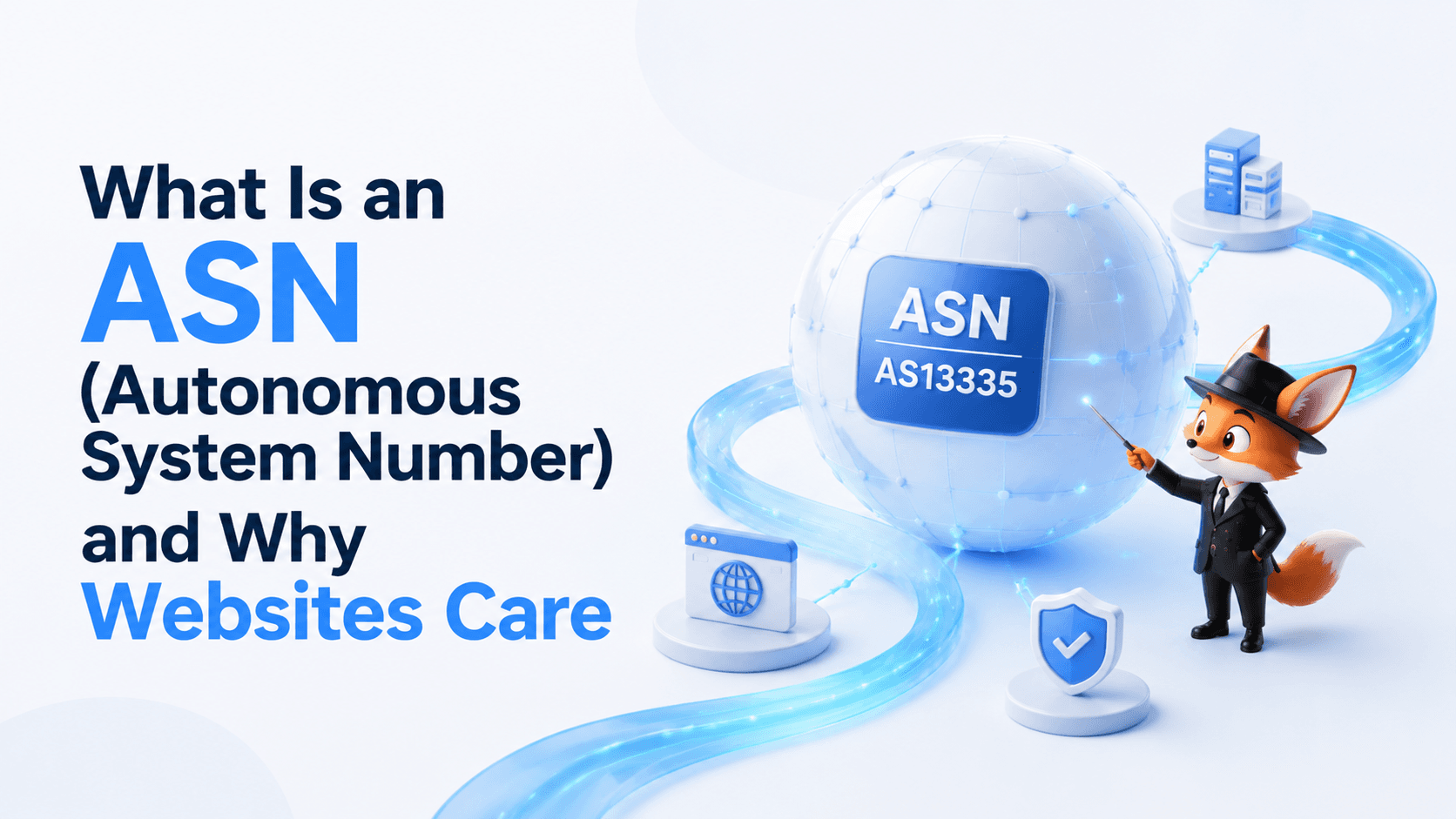
What Is an ASN (Autonomous System Number) and Why Websites Care
We explain what an ASN identifies and why it matters when websites assess a connection. Learn how network data can help distinguish residential, hosting, and other types of traffic.

Paul Jackson
Technology editor
Most people think of the internet in terms of IP addresses. One device — one IP — simple enough.
BBut behind every IP there is another layer that most users never see: ASN (Autonomous System Number).
In 2026, ASN has become one of the important signals used by websites and anti-fraud systems to understand where traffic is actually coming from and how trustworthy it looks.
What is an ASN?
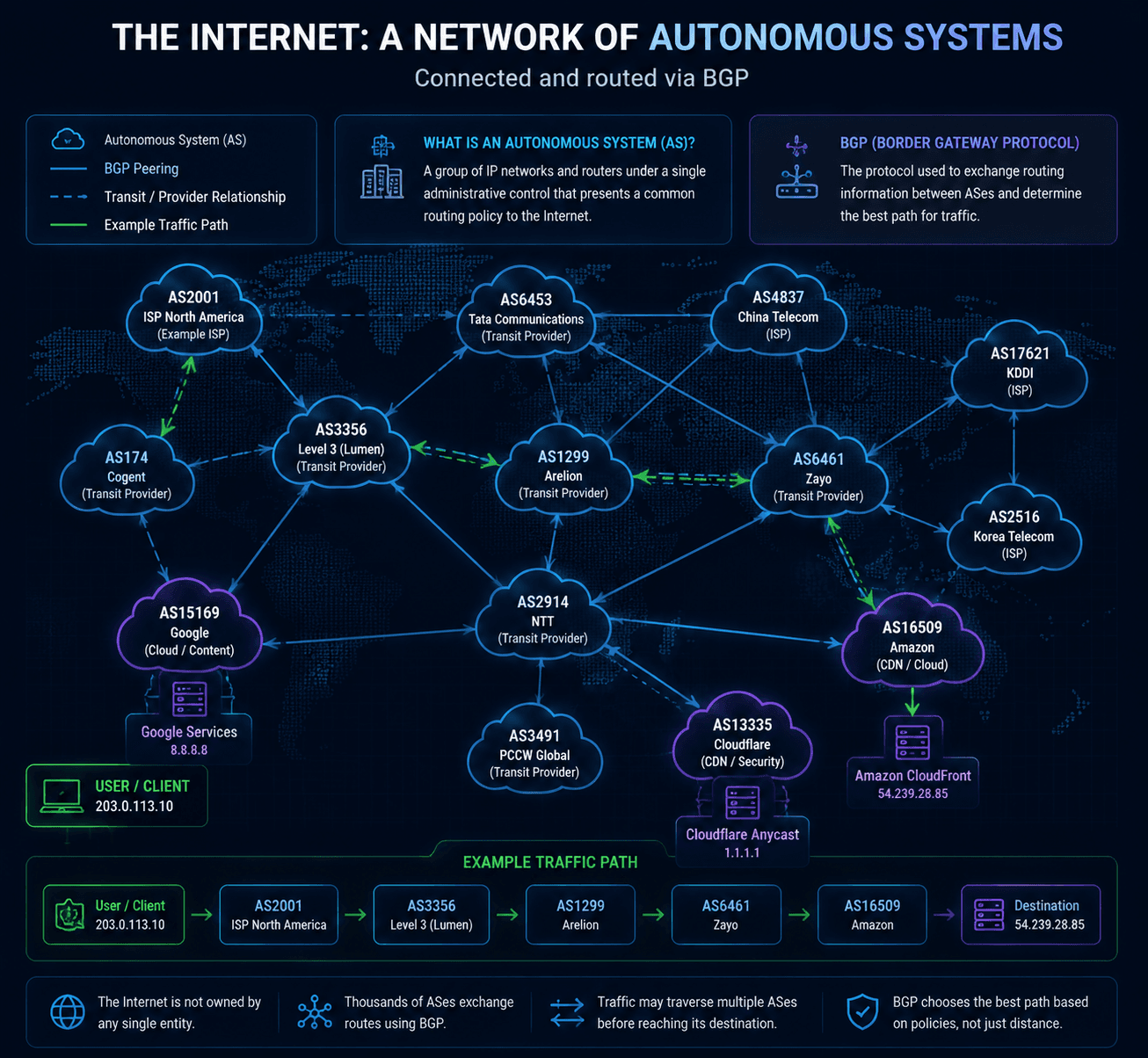
An Autonomous System Number (ASN) is a unique identifier assigned to a network that operates on the internet.
Instead of viewing the internet as a collection of IP addresses, it’s more accurate to think of it as a set of interconnected networks. Each of these networks is called an Autonomous System (AS), and each one has its own ASN.
ASN is assigned to:
- internet service providers (ISPs);
- cloud platforms;
- data centers;
- CDNs;
- large corporate networks.
An IP address identifies a device or endpoint, while an ASN identifies the network that controls or routes that IP range.
How the internet actually uses ASN
The internet is built from thousands of independent networks connected together.
These networks exchange traffic using BGP (Border Gateway Protocol), which determines how data moves from one network to another.
The key idea is simple:
Every internet request passes through multiple networks, and each of them belongs to a specific ASN.
So modern systems don’t just ask “what is this IP?” — they also ask:
“Which network is this IP coming from?”
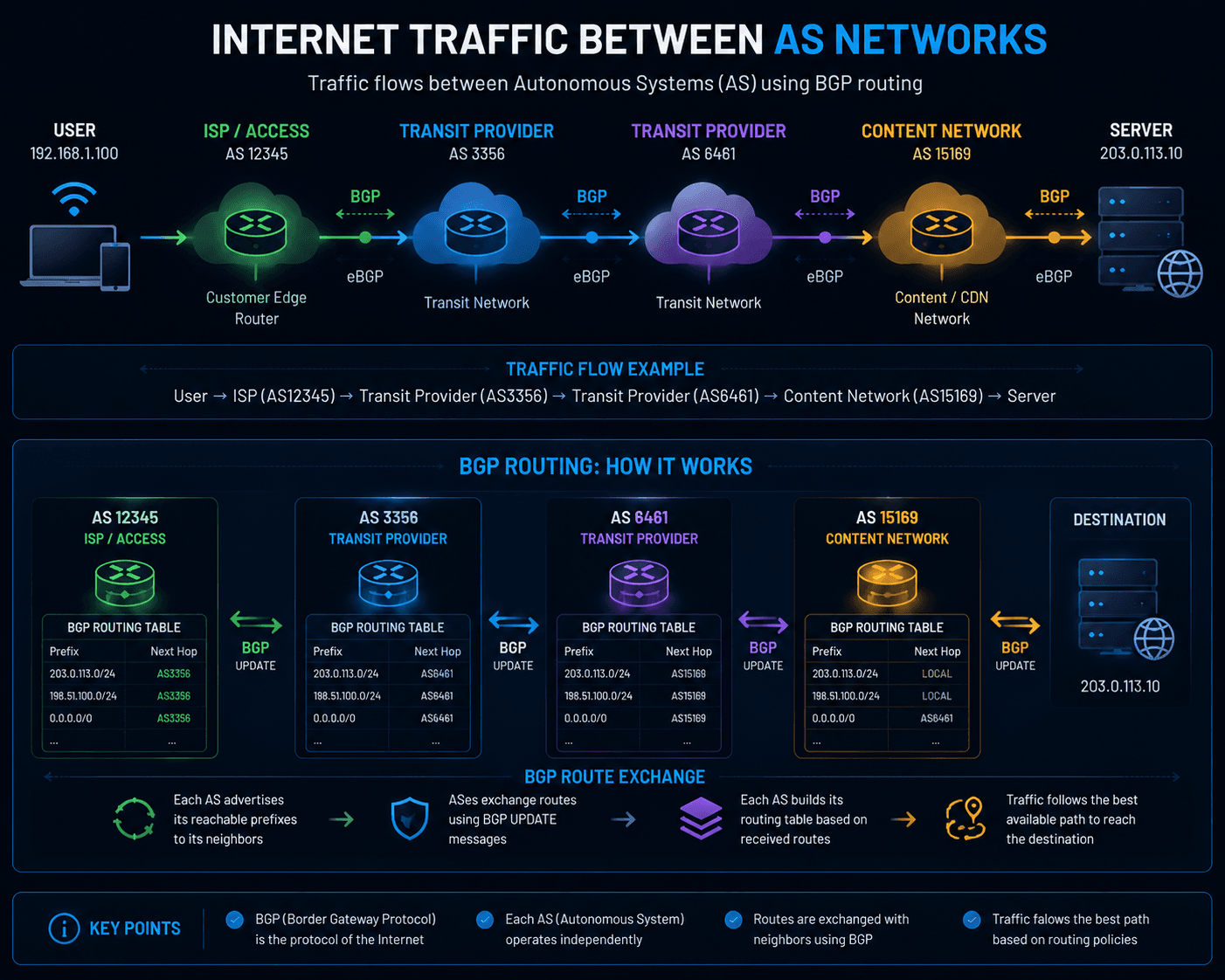
This additional context is exactly what makes ASN so useful.
Why websites care about ASN
Websites rarely evaluate IP addresses in isolation.
ASN gives them a broader view of the traffic source and helps answer questions like:
- Is this traffic coming from a home ISP or a data center?
- Is the network associated with cloud hosting?
- Is it commonly used for bots or automation?
- Is this ASN linked to VPN or proxy infrastructure?
- How many users share this network?
ASN is powerful because behavior is often similar across an entire network, not just a single IP.
ASN in anti-fraud systems
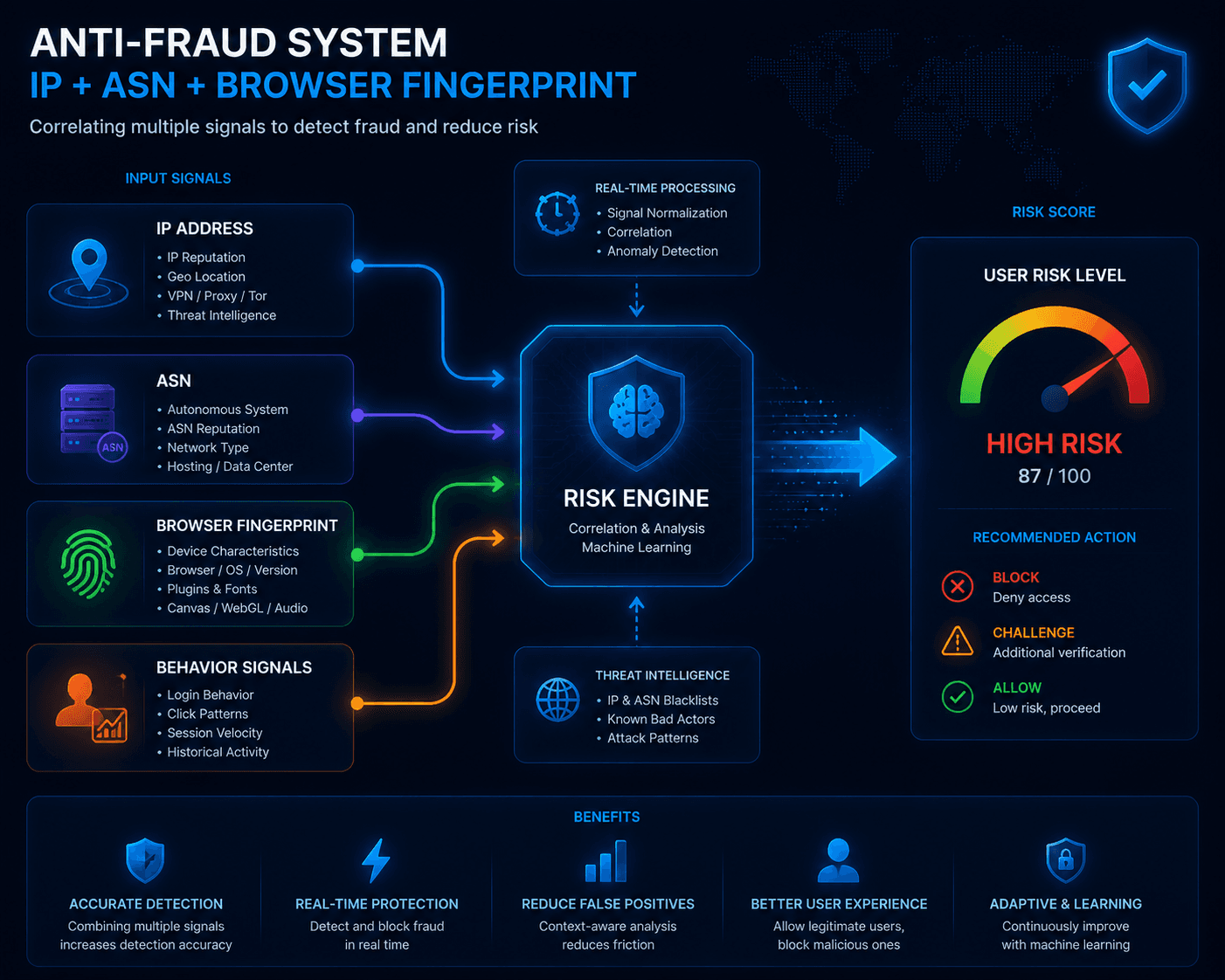
Modern anti-fraud systems combine multiple layers of analysis:
- IP reputation;
- ASN classification;
- browser fingerprint;
- behavioral signals;
- device information.
ASN plays an important role in initial risk scoring.
For example:
- residential ISP ASN → generally low risk;
- cloud hosting ASN → often higher scrutiny;
- known proxy-heavy ASN → frequently flagged.
Some ASNs are even pre-categorized as:
- high-risk networks;
- automation-heavy infrastructure;
- residential trusted providers.
Large cloud providers like AWS, Google Cloud, and DigitalOcean often have separate ASN ranges simply because they host massive shared infrastructure.
Datacenter ASN vs Residential ASN
One of the most important distinctions is how ASN type influences trust.
Datacenter ASN
These belong to hosting providers and cloud infrastructure.
They are typically used for:
- servers and virtual machines;
- automation tools;
- scraping and bots;
- large-scale deployments.
Because of this, traffic from these networks is often treated with caution.
Common characteristics:
- shared infrastructure;
- high request density;
- frequent automation patterns;
- higher probability of triggering security checks.
Residential ASN
Residential ASNs belong to internet service providers that connect home users.
They represent normal household internet activity and therefore tend to look more natural to websites.
Typical characteristics:
- ISP-owned networks;
- human browsing patterns;
- lower automation signals;
- higher baseline trust.
However, even residential ASNs are not immune to risk scoring if suspicious behavior is detected.
| Parameter | Datacenter ASN | Residential ASN |
|---|---|---|
| Network Type | Data centers and cloud platforms | Residential networks operated by Internet Service Providers (ISPs) |
| Examples | AWS, Google Cloud, Azure, DigitalOcean | Residential ISP connections |
| Traffic Characteristics | Automated requests, bots, scripts, and API traffic | Web browsing, streaming, gaming, and social media |
| User Behavior | Frequently repeated requests and short sessions | Diverse activities and longer sessions |
| IP Distribution | Server infrastructure | Residential devices across different locations |
| Anti-Fraud System Assessment | Potentially higher risk | Potentially higher trust level |
| Likelihood of Verification Checks | May be higher | May be lower |
ASN and IP reputation
ASN is closely connected to IP reputation systems.
In many modern platforms:
- IP reputation is evaluated within ASN context;
- entire ASN ranges can be partially trusted or blacklisted;
- behavior inside one ASN influences overall perception.
This creates an important effect:
A “clean” IP inside a risky ASN can still be flagged.
And the opposite is also true:
A well-trusted ASN can improve baseline trust for new IPs.
In practice, reputation is not only about individual addresses but also about the network they belong to.
How websites evaluate ASN + IP trust
When a user connects to a service, multiple checks may happen instantly:
- ASN ownership;
- ASN type (residential vs hosting);
- IP history;
- geolocation consistency.
Tools like Whoer.net often display:
- ISP name;
- ASN number;
- organization behind the network;
- classification of infrastructure type.
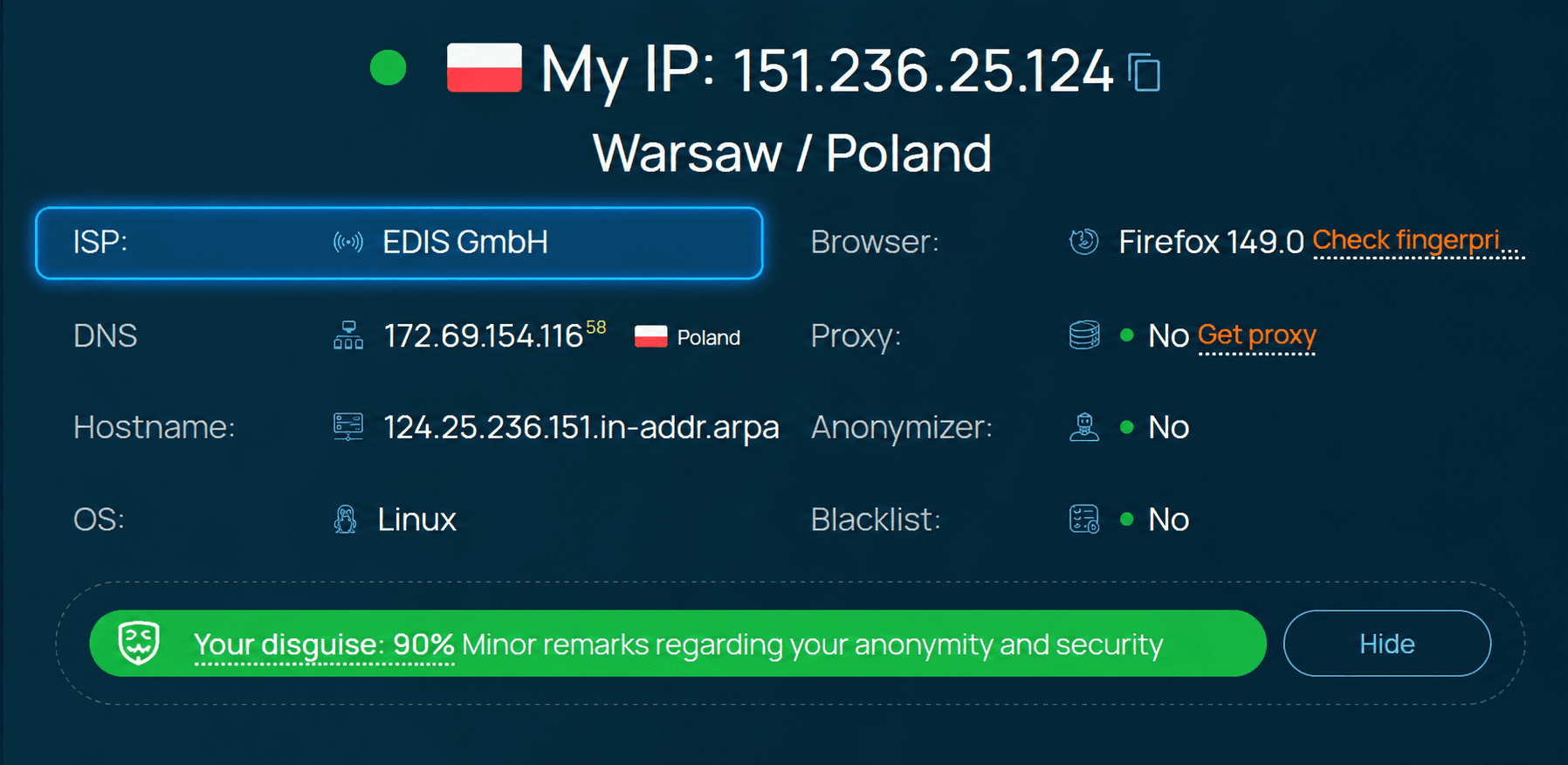
This gives a clearer picture of how the connection appears from the outside.
For example, traffic coming from a known hosting ASN may be treated as automated, even if the IP itself is not blacklisted.
ASN in multi-accounting and privacy workflows
In more advanced setups, ASN becomes an important layer alongside IP and browser fingerprinting.
From a correlation perspective:
- multiple IPs within the same ASN can still look linked;
- repeated activity from one ASN may signal automation;
- datacenter ASN clusters are easier to detect.
On the other hand:
- distributing traffic across different residential ASNs reduces network-level correlation;
- using multiple providers increases network diversity;
- separation improves isolation between accounts.
In anti-detect environments like WadeX, ASN awareness is often part of broader browser profile strategy. Proxy selection, IP type, and network origin are typically evaluated together when building isolated environments.
The goal is not hiding identity, but reducing predictable network patterns and avoiding unintended linkage between browser profiles.
Why ASN matters
Modern detection systems no longer rely on a single signal.
Instead, they evaluate a combination of:
- IP address;
- ASN context;
- browser fingerprint;
- behavioral patterns;
- network reputation.
ASN acts as the network identity layer behind every IP connection.
Without it, IP-based analysis would miss critical context about where traffic is actually coming from.