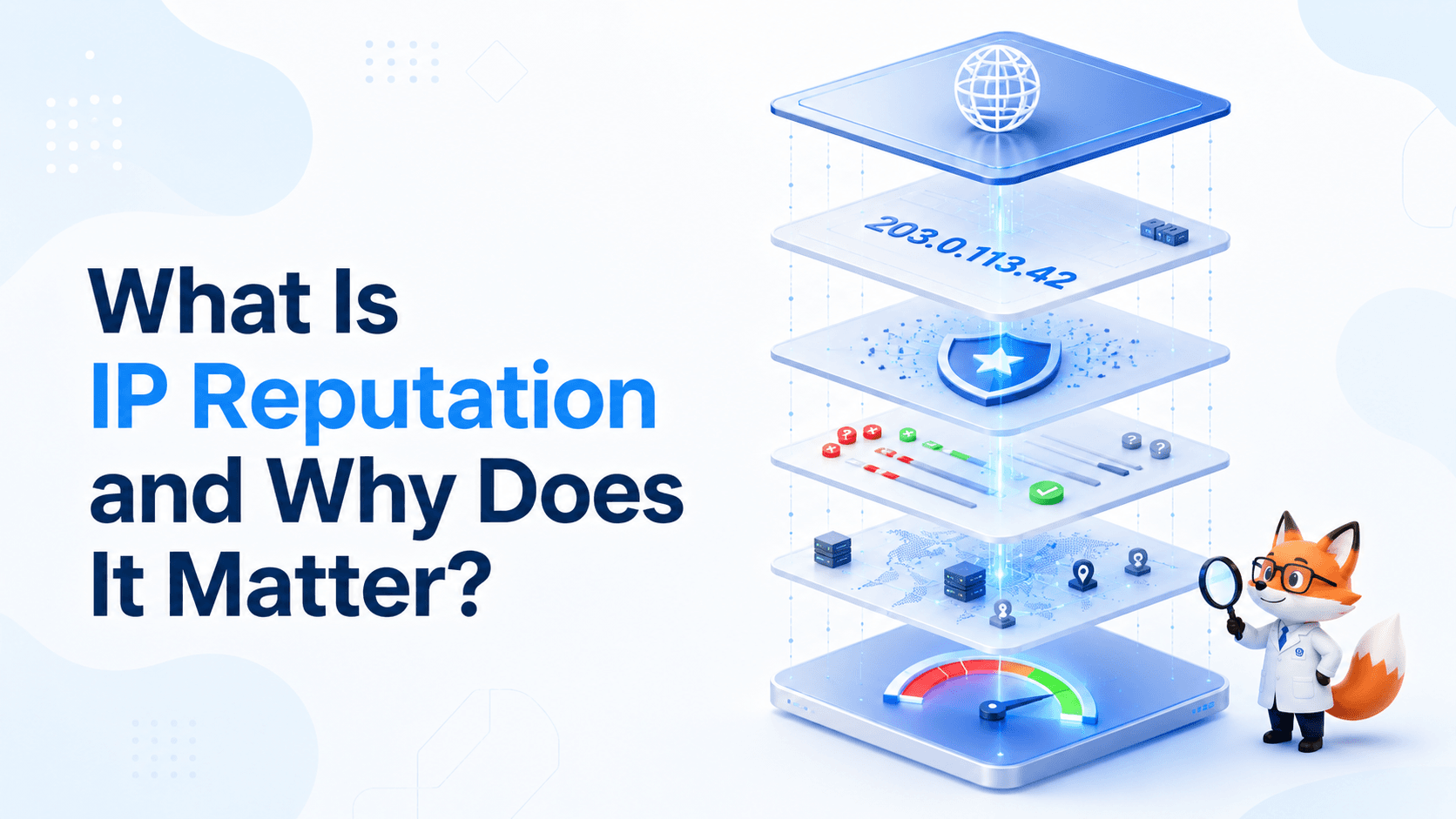
What Is IP Reputation and Why Does It Matter?
Learn what IP reputation is, how it is calculated, which organizations track it, and why a poor reputation can lead to CAPTCHAs, verification requests, and account restrictions.

Paul Jackson
Technology editor
When people evaluate an IP address, they often pay attention only to its location.
Is it from Germany? The United States? Japan?
For many websites, however, geography is only part of the picture. Before deciding whether to trust a visitor, they also look at IP reputation.
Two users can connect from the same city and receive completely different treatment. One signs in without interruption, while the other is immediately asked to solve a CAPTCHA or verify their identity.
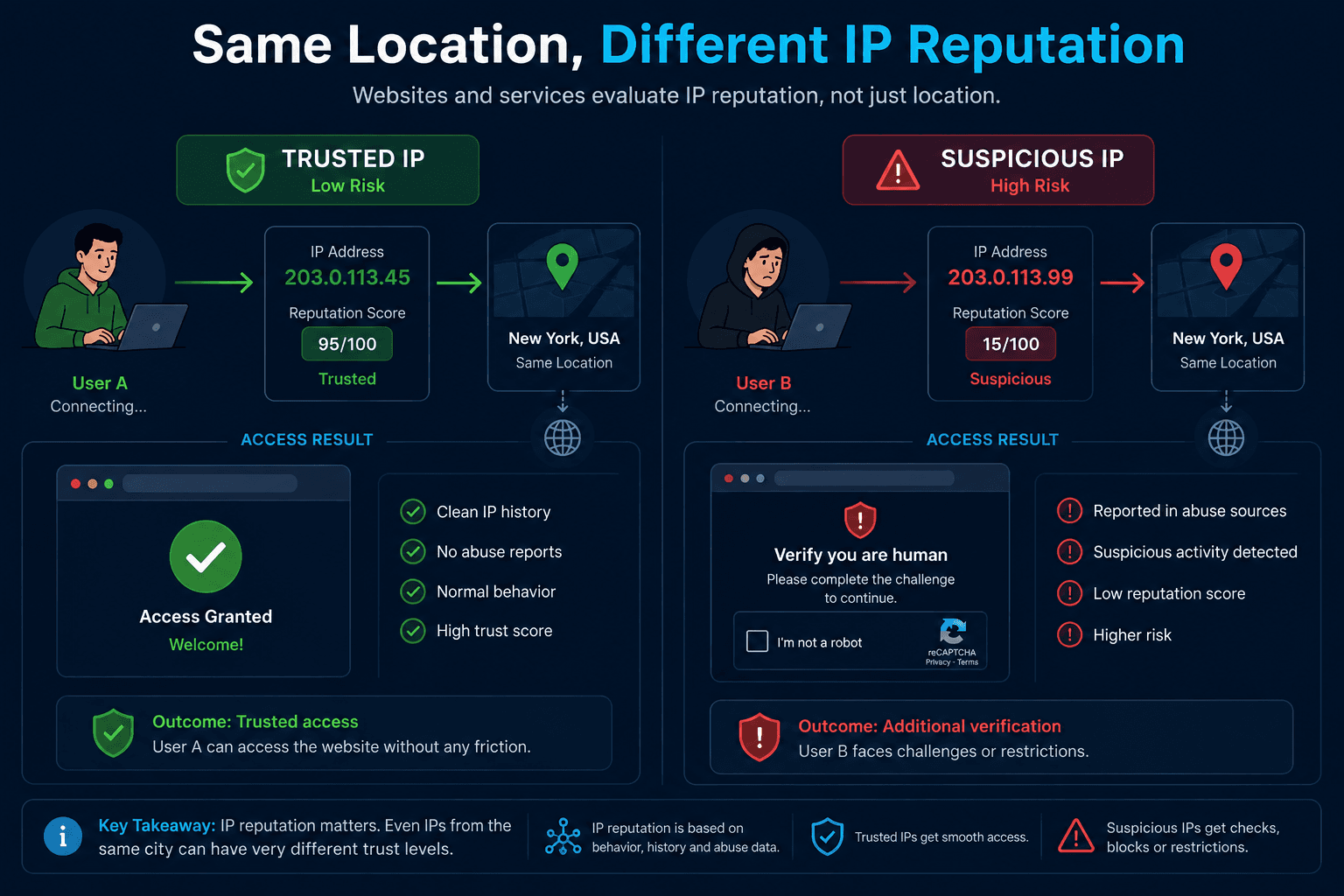
So what exactly is IP reputation, and why has it become such an important factor in 2026?
What is IP Reputation?
IP Reputation is essentially a trust score assigned to an IP address.
It reflects how safe or risky that address appears based on previous activity and historical data.
Before you even type a password, many websites already analyze the IP you’re connecting from. If it has been linked to suspicious behavior in the past, additional security checks may appear automatically.
In other words, the platform often isn’t reacting to you personally. It’s reacting to the history associated with your IP.
How is IP Reputation determined?
There is no universal formula.
Every provider combines different signals to estimate how trustworthy an address is.
Common factors include:
- spam reports;
- bot activity;
- mass account registrations;
- abuse complaints;
- participation in cyberattacks;
- open proxy detection;
- VPN usage;
- malware-related incidents.
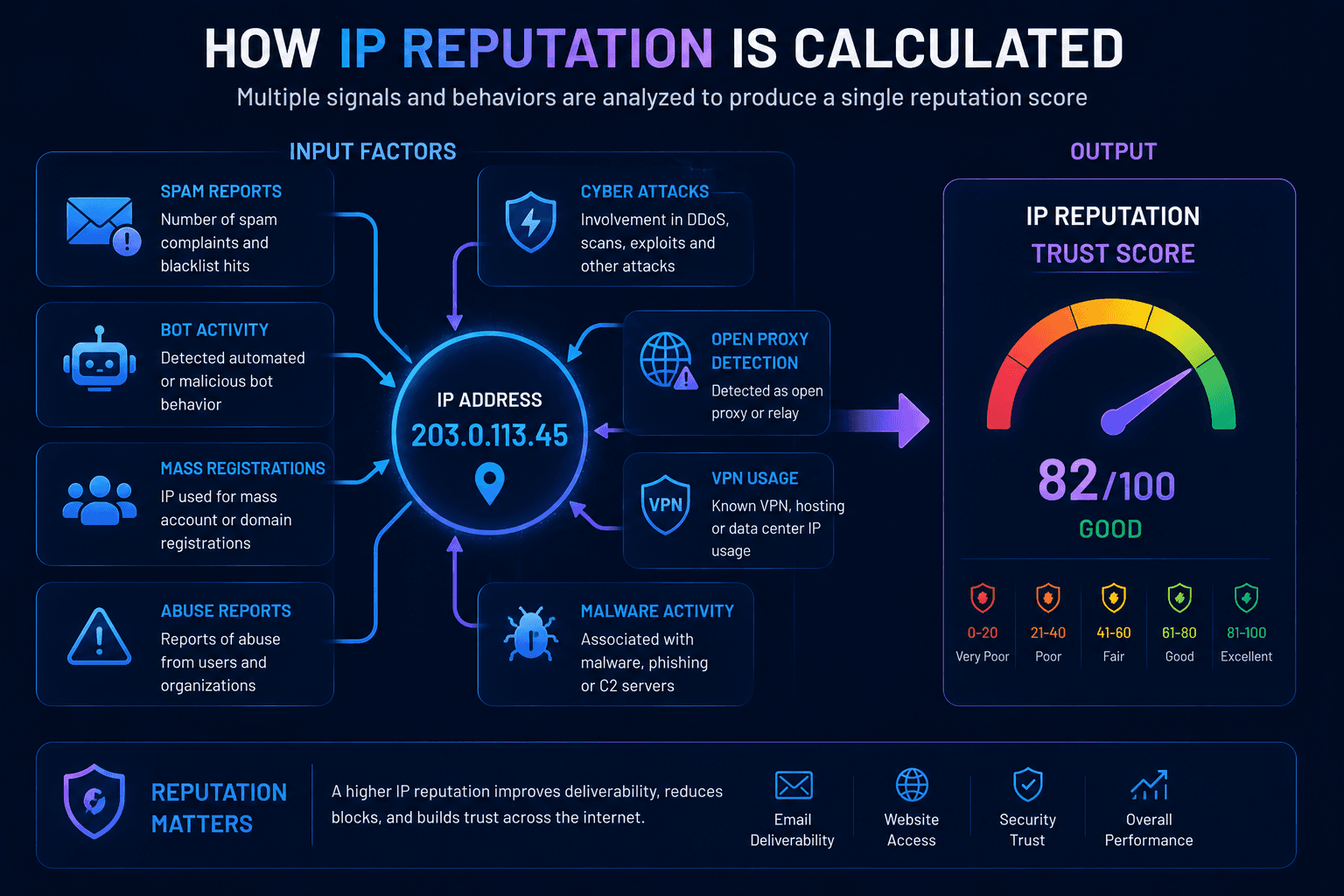
An address repeatedly involved in malicious activity gradually loses trust. On the other hand, an IP that behaves like an ordinary internet connection over a long period usually develops a stronger reputation.
Who tracks IP reputation?
Several organizations maintain their own reputation databases, and many online services rely on them during login and fraud checks.
Some of the best-known providers are:
- Spamhaus
- IPQualityScore (IPQS)
- Talos Intelligence
- AbuseIPDB
- MaxMind
- Project Honey Pot
Because every company collects data differently, the same IP address may receive different ratings depending on which database is being used.
Why websites check IP reputation
Modern platforms rarely rely on passwords alone.
Before approving a login or payment, they may evaluate several signals at once:
- IP reputation;
- browser fingerprint;
- device characteristics;
- account history;
- user behavior.
If one of those indicators looks unusual, the system can automatically increase its risk score and request additional verification.
The entire process usually happens in a fraction of a second.
Datacenter IPs vs residential IPs
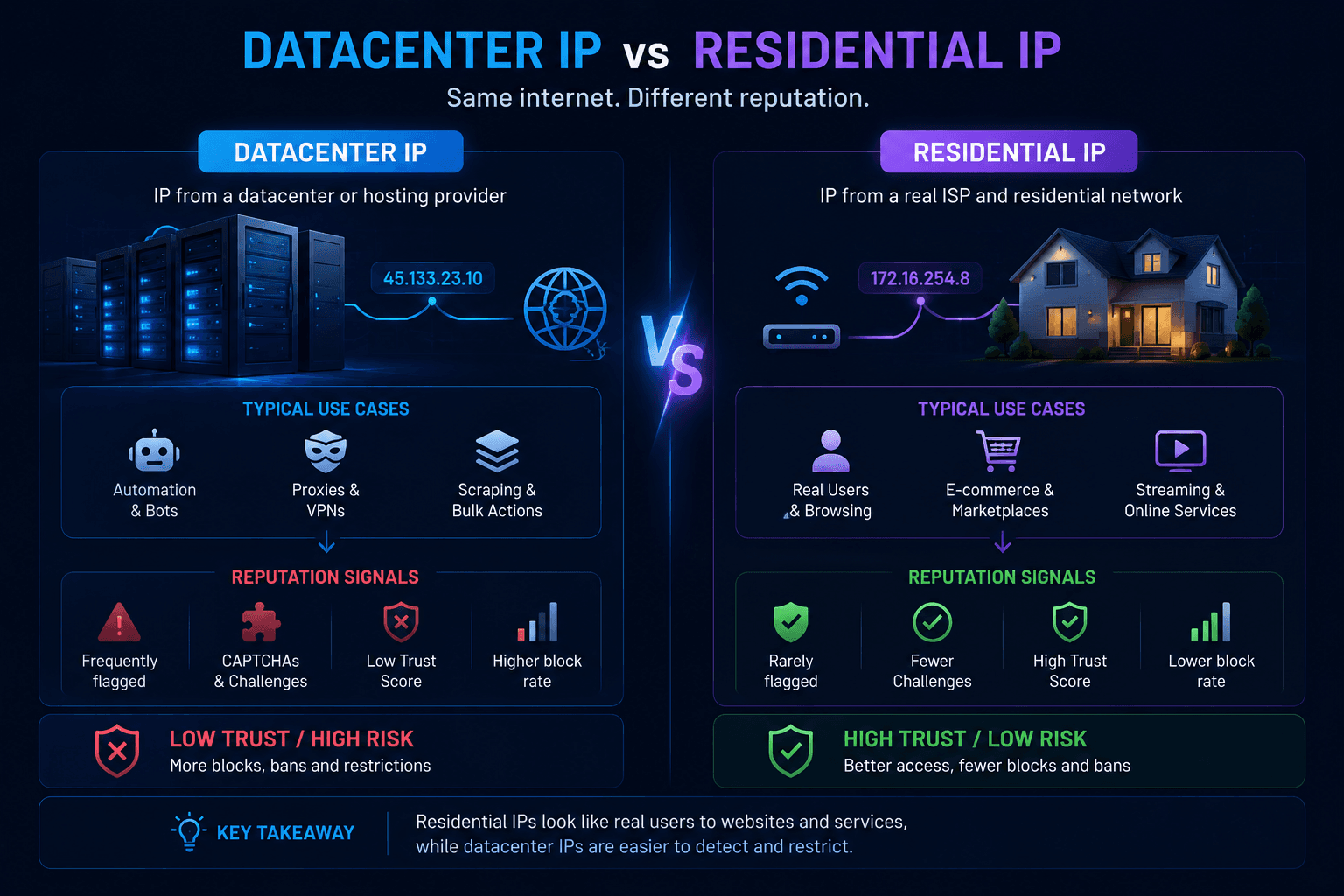
The type of IP address has a significant influence on reputation.
Datacenter IPs
Datacenter addresses belong to hosting providers and cloud infrastructure.
They’re widely used for servers, automation, scraping, bots, and large software deployments.
Because of that, anti-fraud systems often examine them more carefully. They are more likely to trigger CAPTCHA challenges or additional verification steps.
Residential IPs
Residential IPs come from internet service providers and are assigned to real households.
They typically resemble ordinary consumer traffic and therefore often receive higher trust from online services.
That doesn’t mean every residential address has a perfect reputation, but they generally attract less attention than typical datacenter ranges.
Residential proxies and IP reputation
Because residential IP addresses originate from real internet service providers, they usually blend into everyday internet traffic more naturally than datacenter ranges.
For that reason, residential proxies are often preferred for tasks where maintaining a consistent online identity is important, including account management, automation, and anti-detect browsing.
Using a residential IP, however, does not automatically guarantee a good reputation. Every address develops its own history over time, and repeated abuse or spam activity can still reduce its trust score.
Users of WadeX can access residential connectivity through the built-in Wade Proxy integration. Rather than configuring a separate third-party service, residential proxies can be activated directly inside the browser and assigned to individual profiles, helping keep different browser environments isolated.
Why IP reputation matters
Most people only notice reputation after something goes wrong.
Common symptoms include:
- endless CAPTCHA prompts;
- SMS verification requests;
- login restrictions;
- temporary account blocks;
- payment confirmation challenges.
Large online platforms such as Google, Facebook, Amazon, TikTok, PayPal, and Cloudflare frequently incorporate IP reputation into their security decisions.
A poor score doesn’t always prevent access, but it often increases the chance of additional checks.
IP reputation and anti-detect browsers
When managing multiple browser profiles, choosing a good proxy is just as important as browser fingerprinting.
Even a perfectly isolated environment can appear suspicious if it’s connected through a low-quality IP.
That’s why many experienced users follow a simple rule:
One browser profile — one dedicated proxy.
WadeX allows every browser profile to use its own independent proxy configuration, reducing unnecessary IP sharing between accounts.
Can IP reputation be improved?
Usually yes, but not overnight.
Trust tends to recover gradually as databases receive updated information.
Factors that can help include:
- long-term normal usage;
- no spam reports;
- no abusive activity;
- stable browsing behavior;
- reputable residential networks.
There is no instant reset button. In most cases, rebuilding reputation takes weeks or even months.
Verify your connection
After changing proxies or VPN servers, it’s worth confirming that your browser is using the expected network settings.
Whoer.net lets you check:
- Public IP;
- DNS servers;
- geolocation;
- WebRTC;
- IPv6 connectivity.
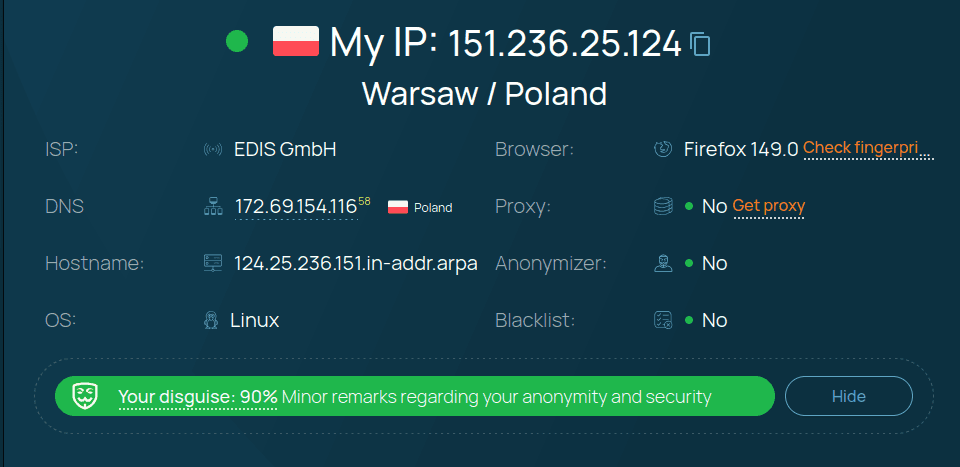
While Whoer doesn’t assign an IP reputation score, it helps verify that your traffic is leaving through the intended connection.